
Close

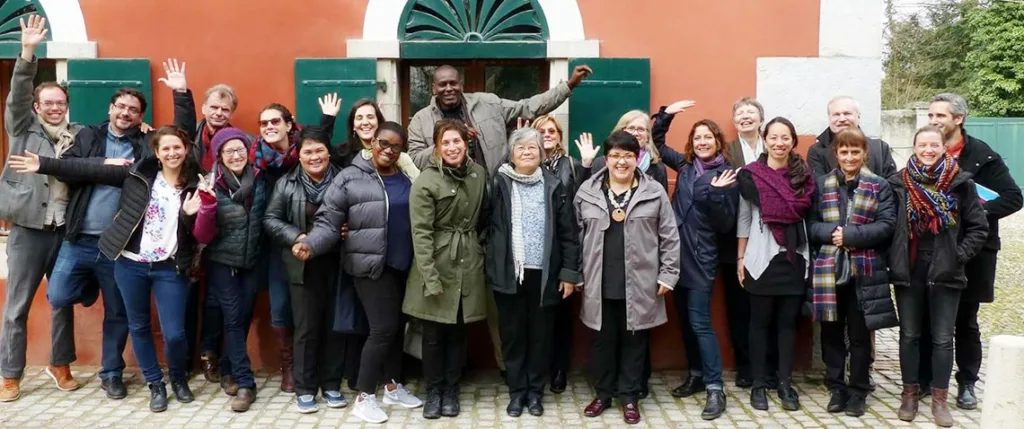
Community-led housing is a process by which residents organise collectively to build their human settlements from the bottom up. Together they plan, finance, build, manage and improve their habitat.
With the right financial, technical, organizational and political support, community-led housing activities result in permanently affordable, more sustainable and inclusive urban spaces to meet the needs of local communities and provide solutions to contemporary urban challenges.
We strive to strengthen communities in their role as urban designers, developers and builders, and more broadly, in their role as active citizens of their cities. We believe in their collective capacity to develop long-term solutions to challenges related to climate change and social transformations through solidarity and resilience.
As an open and action-oriented collaboration, we work together to demonstrate the successes and potential of community-led housing, and make it more widespread and attainable by co-producing knowledge through experience exchanges, peer-to-peer learning and community-managed data production; connecting people across countries, organizations and regions; and co-designing affordable and collaborative financial tools.
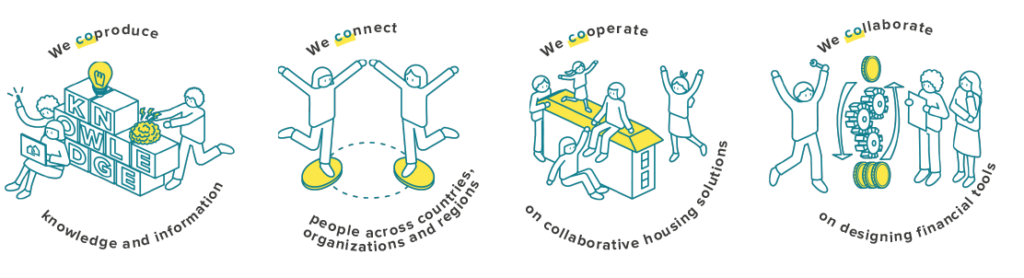
So far, the CoHabitat Network has successfully:
CoHabitat is a joint initiative by grassroots federations and umbrella organizations, as well as non-profit organizations and academic institutions working in the field of community-led housing.
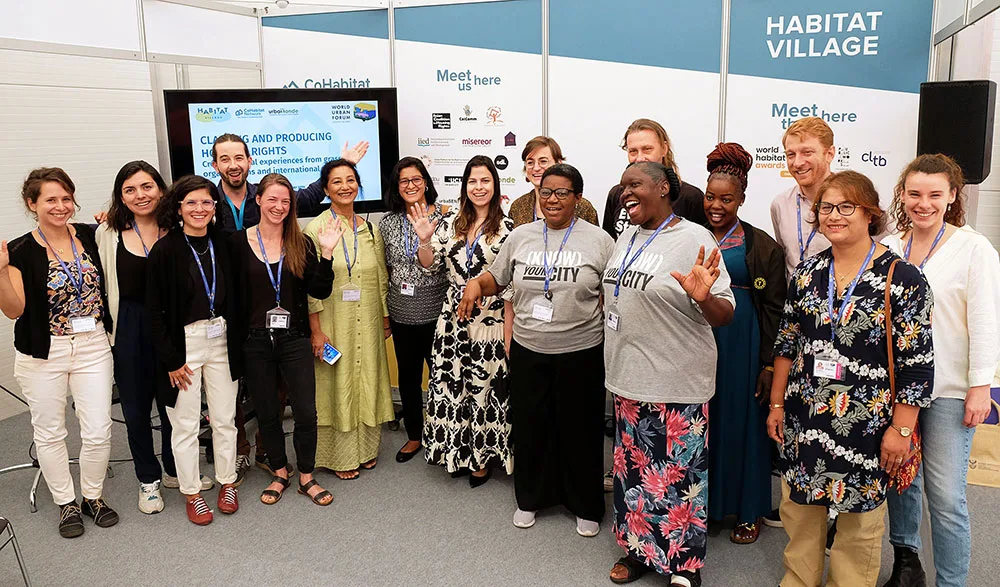
CoHabitat is a joint initiative by grassroots federations and umbrella organizations, as well as non-profit organizations and academic institutions working in the field of community-led housing.
ACHR is a coalition of Asian professionals, NGOs and community organizations committed to finding ways to make change in the countries where their work is rooted and to promote the access to affordable and adequate housing and the production of inclusive cities.
Catalytic Communities (CatComm) is a Rio de Janeiro-based non-profit organization providing strategic support to hundreds of local favela communities since 2000, with programs focusing on grassroots communications and organizing, sustainable infrastructure development, and housing and human rights. CatComm is responsible for Brazil’s Favela Community Land Trust program, Rio’s Sustainable Favela Network and award-winning local-to-global reporting site RioOnWatch. All projects are co-created through an Asset-Based Community Development approach.

Co-Lab Research is a research group working on the development, discussion and valorisation of knowledge on Collaborative Housing. Co-Lab Research is located in the Department of Management in the Built Environment, Faculty of Architecture and the Built Environment, at the Delft University of Technology.
Cooperative Housing International (CHI) is one of the eight sectoral organizations of the International Cooperative Alliance (ICA). CHI promotes cooperative housing as both an economic and social solution to the global shelter crisis.
Community Land Trust Brussels (CLTB) provides permanently affordable, high-quality housing for low-income residents through an innovative model separating land ownership from housing, reducing costs by up to 40%. The organisation ensures long-term affordability through capped resale prices and supports access to mortgages. CLTB actively involves residents in the design and management of projects while fostering community development through local partnerships and social initiatives. It also promotes the CLT model across Brussels, Belgium, and Europe, contributing to inclusive and non-speculative urban development.

The Development Planning Unit (University College London) conducts world-leading research and postgraduate teaching that helps to build the capacity of national governments, local authorities, NGOs, aid agencies and businesses working towards socially just and sustainable development in the global south. DPU particularly collaborates on the civic urban media approach, by promoting media for change, by and for the communities of the urban poor.
The European Community Land Trust Network (ECLTN) connects and supports over 300 CLTs across Europe, fostering collaboration and innovation to scale their impact. It aims to strengthen the capacity of CLTs to deliver sustainable, affordable housing solutions and promote non-speculative land use. The network works to enable the movement’s growth and maximise its long-term social and environmental impact. ECLTN advocates for the recognition of CLTs as a model for inclusive and sustainable housing across Europe.

Egnahemsfabriken Tjörn is a member-driven cooperative platform that promotes socially inclusive and sustainable housing through participatory design and self-build practices. Based in Sweden, it empowers diverse groups to take an active role in construction, creating pathways to affordable housing and fostering local resilience. Its activities combine building projects with education, research, and community initiatives. Egnahemsfabriken also serves as an innovation hub for social construction, rural development, and collaborative living models.

FUCVAM (Uruguayan Federation of Mutual Aid Housing Cooperatives), founded in 1970, is Uruguay’s largest and oldest social movement promoting affordable, quality housing through self-managed, collectively owned cooperatives. Representing over 730 cooperatives and 35,000+ families, it is guided by solidarity, mutual aid, and democratic participation. FUCVAM empowers members to actively participate in construction, management, and maintenance, shaping inclusive urban landscapes. Since 2001, it has supported the international transfer of its cooperative housing model, and its innovative approach was recognized in 2012 with the UN-Habitat award.
FULL (Future Urban Legacy Lab) is a research center at Politecnico di Torino exploring the future of contemporary urbanity. It produces transformative analyses and visions for cities and territories, studying physical, economic, and social dynamics to support decision-making at multiple scales. FULL addresses contemporary challenges posed by ecological, digital, and social transitions through interdisciplinary research. By combining analysis, design, and collaborative experimentation, it fosters innovative, impactful approaches to urban development.
The Global Platform for the Right to the City (GPR2C) is an international network of civil society and local government organizations advocating for inclusive, democratic, and sustainable cities. Launched in 2014, it unites social movements, NGOs, academics, and governments to promote the Right to the City, giving voice to marginalized communities. GPR2C combines advocacy, research, and training to influence policies at local, national, and global levels, fostering social justice, participatory governance, and equitable urban development. Its work supports the creation of new collective imaginaries and transformative urban practices worldwide.
HIC is a global, independent, and non-profit network for the defense, promotion and realization of human rights related to habitat and a safe place to live in peace and with dignity, both in urban and rural areas. HIC emerged from a civil society initiative at Habitat I in 1976.
The aim of Habitat et Participation is to promote participatory practices leading to the production and management of urban or rural housing, with a view to sustainable development, and to contribute to the implementation of the right to decent housing by running experimental projects and providing legal or administrative assistance relating to housing, with priority given to households in a precarious situation.
Founded in 2013, Habitat Participatif France is a citizen-driven movement promoting participatory, ecological, and solidarity-based housing. With nearly 1,100 projects across France, the movement supports diverse initiatives that foster collaborative, sustainable, and community-oriented living. Habitat Participatif France provides tools and resources to help groups plan, develop, and implement their own participatory housing projects.

The International Center for Community Land Trusts promotes and supports community land trusts and similar strategies of community-led development on community-owned land in countries throughout the world.
id22 is a Berlin-based, non-profit, multidisciplinary institute focused on transformative social-ecology and community-led urban development. Since 2003, it has combined theory and practice in regenerative housing, inclusive cohousing, community land trusts, and urban sustainability initiatives. The institute brings together architects, planners, sociologists, artists, and community developers to support local projects, research, and educational programs. Emphasizing self-organization, cooperation, and conviviality, id22 fosters creative, non-speculative approaches to sustainable urban life.
The International Institute for Environment and Development (IIED) is an independent research organisation that aims to deliver positive change on a global scale. IIED’s mission is to build a fairer, more sustainable world, using evidence, action and influence, working in partnership with others.
La Dinamo is a Barcelona-based foundation promoting cooperative housing on a use-right basis as an alternative to conventional housing models. It supports initiatives that expand cooperative housing projects, fostering autonomous and self-sufficient cooperatives. Through inter-cooperation and networking, La Dinamo works to establish a non-speculative, inclusive, sustainable, and collectively owned housing model, positioning it as a reference within the social and solidarity economy.
LUMANTI, founded in 1994, is a Nepal-based non-profit organization dedicated to alleviating poverty through improved shelter and living conditions. It works primarily with informal settlements and marginalized urban communities, focusing on slum upgrading, affordable housing, water and sanitation, community strengthening, and advocacy. LUMANTI aims to facilitate access to basic services and affordable housing while building resilience against socio-economic hardships and disasters.
MOBA is a network of pioneering housing cooperatives from Belgrade (Ko gradi grad), Budapest (Rákóczi Collective), Ljubljana (Zadrugator), Prague (Sdílené domy) and Zagreb (Cooperative for Ethical Financing) promoting an innovative and anti-speculative cooperative housing model for the region, providing solutions to the challenges of housing affordability and accessibility.
MULTIPRO is a Nicaragua-based cooperative founded in 2013 by young professionals to promote social development through project management and technical services. It works with public and private partners to support vulnerable groups, building alliances across social sectors. MULTIPRO provides expertise in cooperative formation, strategic planning, and technical assistance, including housing and agricultural initiatives. It currently supports housing cooperatives in Matagalpa, facilitating organization, legalization, and access to land, financing, and supportive policies.

The Philippine Action for Community-Led Shelter Initiatives (PACSII) is a Philippines-based NGO supporting community-led housing through capacity building, research, advocacy, and resource mobilization. With over 20 years of experience, it serves as a key support institution for the Homeless People’s Federation Philippines, strengthening grassroots organizations and collective decision-making. PACSII promotes participatory housing by empowering low-income communities to plan, implement, and manage their own projects. It also advocates for inclusive policies and connects communities to networks that enhance their voice and influence.
The Platform of Community Action and Architecture (POCAA), based in Bangladesh, is a collaborative platform connecting professionals and communities to advance participatory architecture and community-led development. It works closely with low-income and informal settlements, particularly in Dhaka, co-creating housing and social infrastructure through tools such as community mapping and profiling. Guided by the principle “let people be the solution,” POCAA empowers communities to lead their own development processes. It also fosters knowledge exchange and networks, including collaboration with the Community Architects Network (CAN).

SDI is a network of community-based organisations of the urban poor in 33 countries and hundreds of cities and towns across Africa, Asia and Latin America. In each country where SDI has a presence, affiliate organizations come together at the community, city and national level to form federations of the urban poor.
Sostre Cívic was born in 2004 as an association and has more than 1000 members in Catalonia. It is the first organisation in the territory to promote the right to use housing cooperative model. This is an alternative model of access to housing that is fairer, more accessible, non-profit, non-speculative and transformative.
Student Co-op Homes UK is a national, member-led cooperative supporting student housing co-ops in the UK. It enables property acquisition and development, provides training and advice to new and established co-ops, and helps take student housing out of the speculative private market. Through collective resources, steady rental income, and financial support, the organisation strengthens the student housing co-op movement, empowering students and fostering a sustainable cooperative economy. It is also a founding member of the European Student Cooperative Housing Alliance (ESCHA).

Studentendorf Schlachtensee eG is a cooperative managing student housing in Berlin, rooted in the historic academic housing complex near the Freie Universität and the Humboldt Universität campus. Founded by students who resisted demolition and fought to preserve the village, the cooperative now provides community-oriented, listed buildings for around 900 students. It combines heritage preservation with democratic self-administration and active resident participation, and has been recognized with the Deutscher Bauherrenpreis (German Construction Award) 2020 for its work in student housing. The cooperative continues to expand and renovate its facilities, fostering inclusive and collaborative living environments.

Urban Poor Consortium (UPC), founded in 1997 in Indonesia, empowers marginalized urban communities through grassroots organizing, advocacy, and network development. It promotes social, economic, and gender justice, supporting people-led solutions for housing, settlements, and disaster resilience. UPC applies participatory, community-driven approaches to urban poverty, ensuring that communities have a voice and control in shaping their living environments.

UrbaMonde operates in Switzerland and in France, by offering technical support to public actors in participative urban development projects, as well as to groups of inhabitants implementing collaborative housing solutions, while promoting innovation in non-speculative land management and access to affordable housing finance.

urbaSEN is a Senegalese association of urban professionals working to improve living conditions for vulnerable communities through participatory urban planning. Originating from grassroots initiatives in Dakar, it places residents at the center of decision-making and supports inclusive, community-led development. In close collaboration with the Senegalese Federation of Inhabitants, it delivers projects on housing, land regularization, and flood resilience. urbaSEN promotes innovative, locally driven solutions to foster more equitable, sustainable, and resilient cities.
World Habitat is an independent charity working internationally to help bring the best housing to the people who need it the most. World Habitat is the organizer of the annual World Habitat Awards rewarding inspiring initiatives from across the world and providing opportunities for peer learning.
In October 2014, the Swiss NGO urbaMonde organised a Social Production of Habitat Forum in Geneva, bringing together various major networks and organisations of inhabitants from across the world. Together, we discussed the challenges and opportunities of community-led housing to guarantee access to adequate housing. From this forum was born the will to develop a common strategy and to promote an international community-led housing movement through the creation of the Social Production of Habitat (SPH) database.
The implementation of the tools started in 2016, with the organization of the first regional meetings and project Awards, as well as the launch of the database (cohabitat.io).
The SPH platform became the CoHabitat Network in 2018.
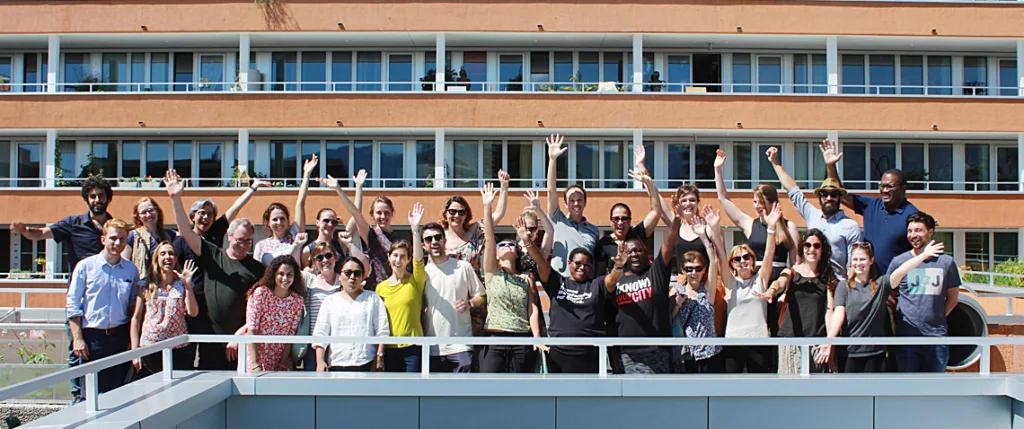

The Charles Léopold Mayer Foundation for the Progress of Humankind (FPH) is a Swiss foundation that makes grants to civil society movements and organisations to support their actions in favour of a social and ecological transition.
World Habitat is an independent charity working internationally to help bring the best housing to the people who need it the most. World Habitat is also part of the CoHabitat Network, and the organizer of the annual World Habitat Awards.
The Laudes Foundation envisions global markets that value all people and respect nature, an economy in which industries uplift all who participate in them, and regenerate and restore nature as a fundamental part of what they do.